
What Salesforce Teams Really Think About AI in Data Management
Based on Cloudingo’s Original Survey of 323 Salesforce Professionals
Can You Trust AI With Your Salesforce Data?
AI is moving quickly across the Salesforce ecosystem
Teams are testing AI agents, automation features, and new ways to reduce manual work. It is natural that data management is part of that conversation. If AI can help identify duplicates, flag incomplete records, or support cleanup tasks, many admins would welcome it.
But there is an important question underneath that interest. Can AI be trusted with the data it depends on?
Especially in Salesforce, where duplicate Accounts, outdated Contacts, and inconsistent records can affect reporting, pipeline visibility, and, as a result, business decisions. In these situations, even a small mistake in how data is interpreted or changed today can create larger problems in the future.
To understand how Salesforce teams are thinking about this, Cloudingo conducted an original survey of 323 Salesforce professionals in March 2026. We refer to it here as the Cloudingo survey. The survey explored where teams are with AI today, how comfortable they are using AI for data quality tasks, and where they still want human control.
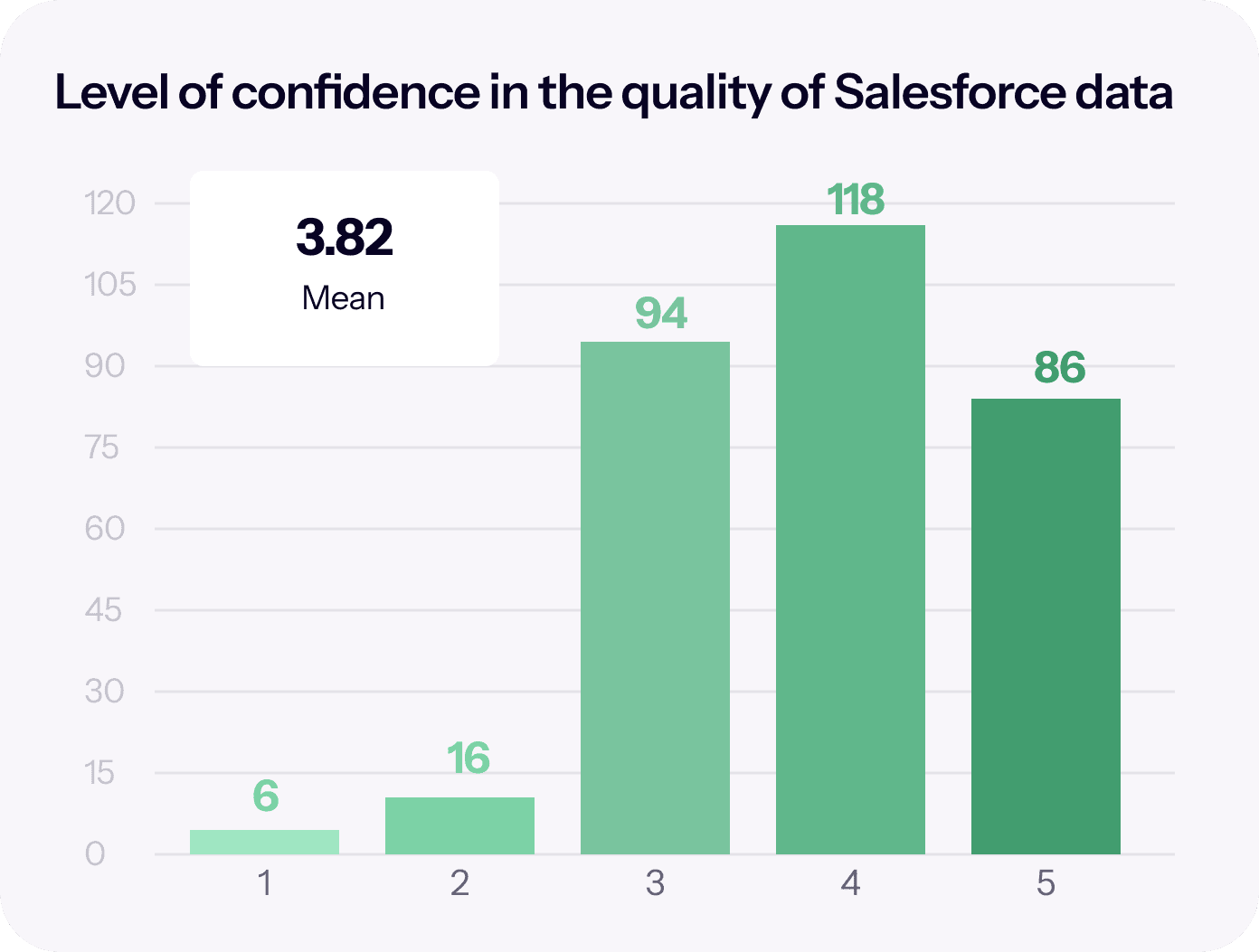
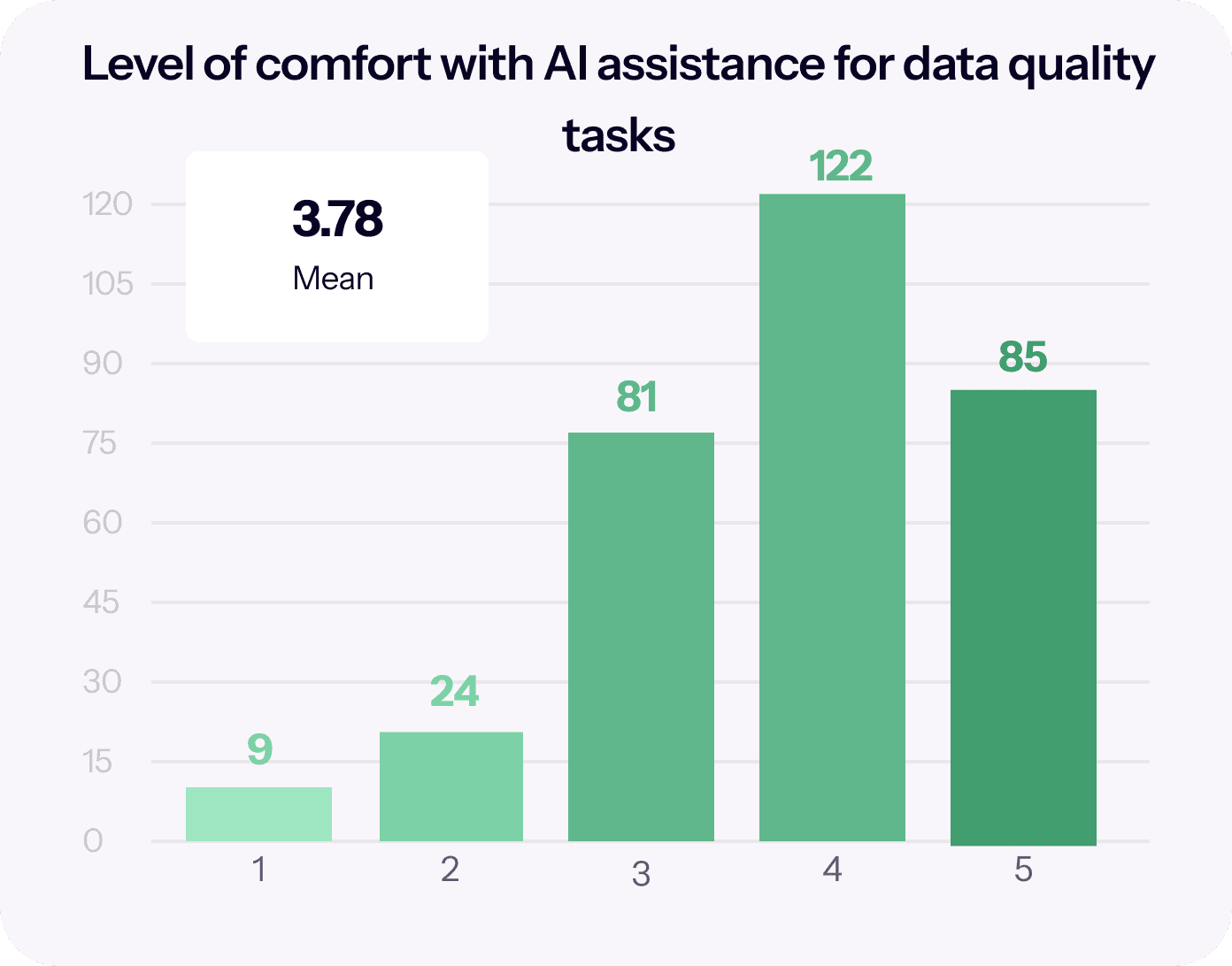
The figures from this survey reveal an interesting pattern. Respondents rated confidence in the quality of their Salesforce data at 3.82 out of 5, while comfort with AI assisting with data quality tasks came in at 3.78 out of 5.
Those scores are close, and neither is especially high. That suggests many teams are taking a measured view of both topics. They are open to AI, but they are also aware of data quality, which can limit the value of automation.
This cautious view also lines up with broader Salesforce research: 86% of IT leaders believe data quality makes or breaks AI effectiveness. So the question is not only whether teams are ready for AI, but whether their Salesforce data is ready to support it.
AI Adoption in Salesforce Is Still in Early Stages
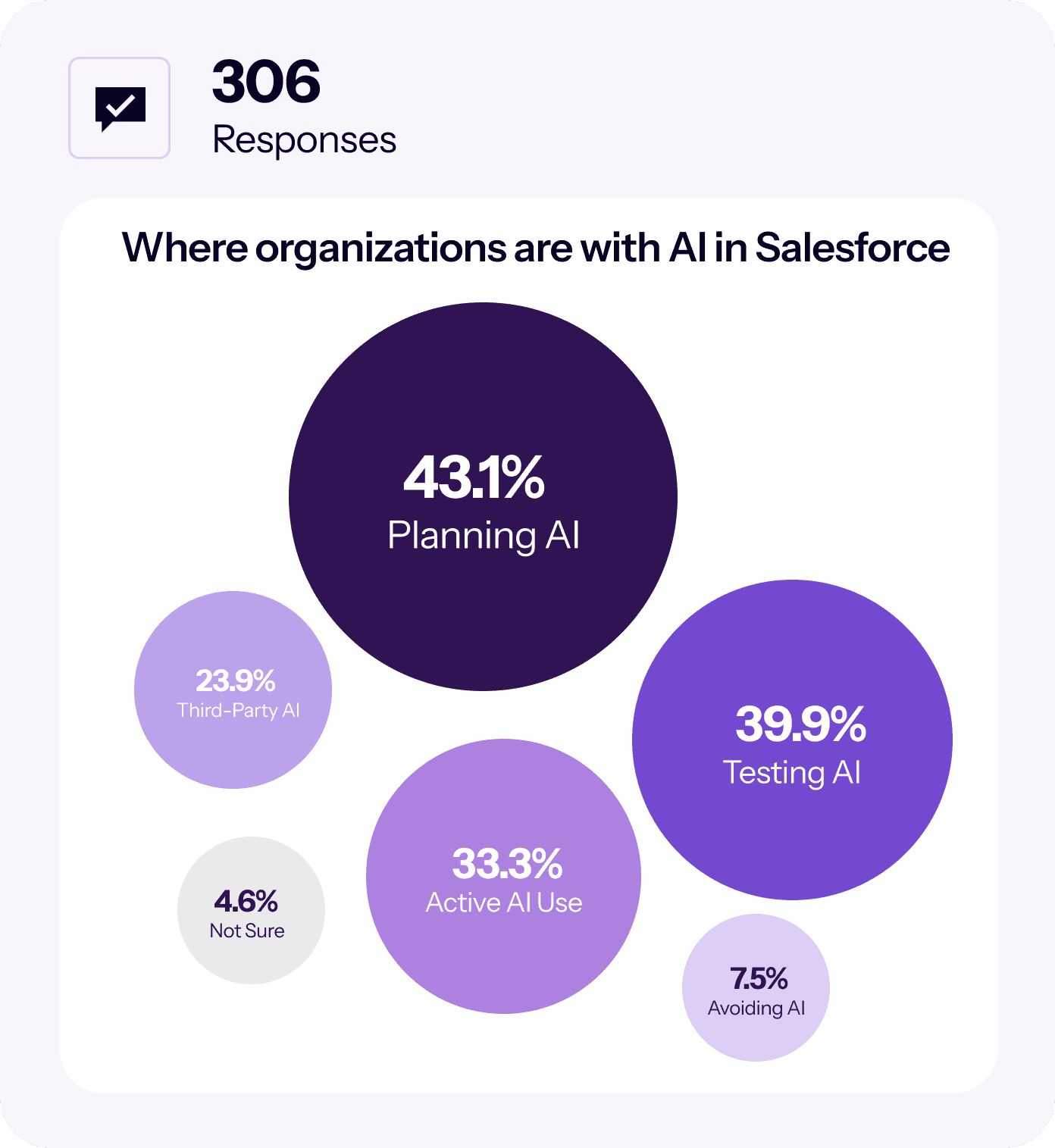
The next survey result helps explain why trust matters so much. When Cloudingo asked where organizations are with AI in Salesforce, the answers did not indicate a single, clear level of maturity.
Because respondents could select more than one answer, the results show mixed stages of adoption. But the most popular stages are still planning, researching, piloting, or testing.
In the survey, 43.1% of respondents said their organization is planning or researching AI adoption, and 39.9% said they are piloting or testing AI initiatives. At the same time, 33.3% said they are actively using AI in Salesforce, while 23.9% said they are using third-party AI tools with Salesforce.
That mix shows that AI is not something Salesforce teams are ignoring; only 7.5% of respondents chose that answer, but it also is not fully settled in daily work. Many teams seem to be in the stage where they want to understand what AI can safely do before letting it touch sensitive data processes.
Salesforce research adds useful context: 38% of new applications now include an AI component. As AI becomes part of more workflows, teams need to be more careful about the data those workflows depend on. Data management is a good example of this cautious approach. Detecting a duplicate is one thing. Merging records, changing field values, or deciding which record should survive is another. In real Salesforce work, those decisions affect reports, automation, ownership, and customer history.
Teams are testing the value of AI, but they are still careful about where they place trust
Where AI Already Helps in Salesforce Data Quality
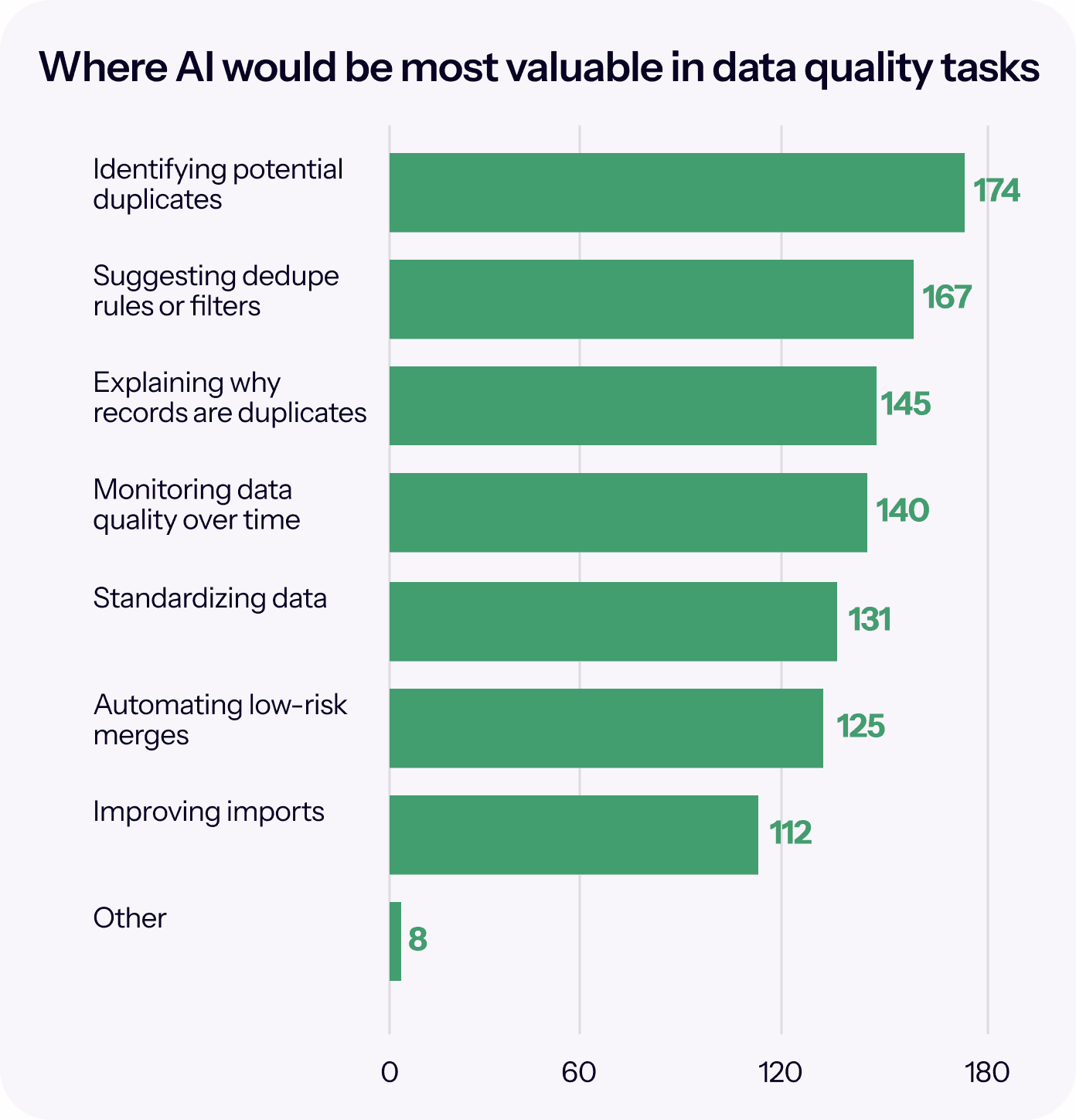
If the previous insight shows that teams are still careful with AI, this survey result shows where they already see clear value. When Cloudingo asked where AI would be most valuable in data quality tasks, the strongest answers were not about giving AI full control. They were about helping teams find and understand data problems.
Because this was also a multi-select question, the counts represent selections, not separate respondent groups.
- The most selected option was identifying potential duplicates, with 174 selections, representing 55.2% of the 315 respondents who answered this question.
- Close behind was suggesting dedupe rules or filters, with 167 selections, representing 53% of respondents.
- Another 145 selections, representing 46% of respondents, went to explaining why records are duplicates.
Duplicate management is rarely as simple as finding two identical company names. Records may differ by legal name, email type, history, address, or title. In these cases, AI can help surface records that deserve attention.
Other responses point in the same direction:
The open-text answers also mentioned smart enrichments, address verification, recognizing personal names versus generic email addresses, and identifying duplicates in disguise.
A clear pattern appears in these results. The most selected answers were related to identifying, explaining, and suggesting. Salesforce teams do not seem to be asking AI to take over data quality work completely. They want AI to help them see issues earlier, group records more intelligently, and reduce the manual review needed before making a decision.
This matters because Salesforce research shows that 41% of desk workers’ time is spent on low-value work. In data quality work, AI-assisted review can help reduce some manual checking when the process is well-controlled.
Where Trust Breaks: What Teams Do Not Want AI to Automate
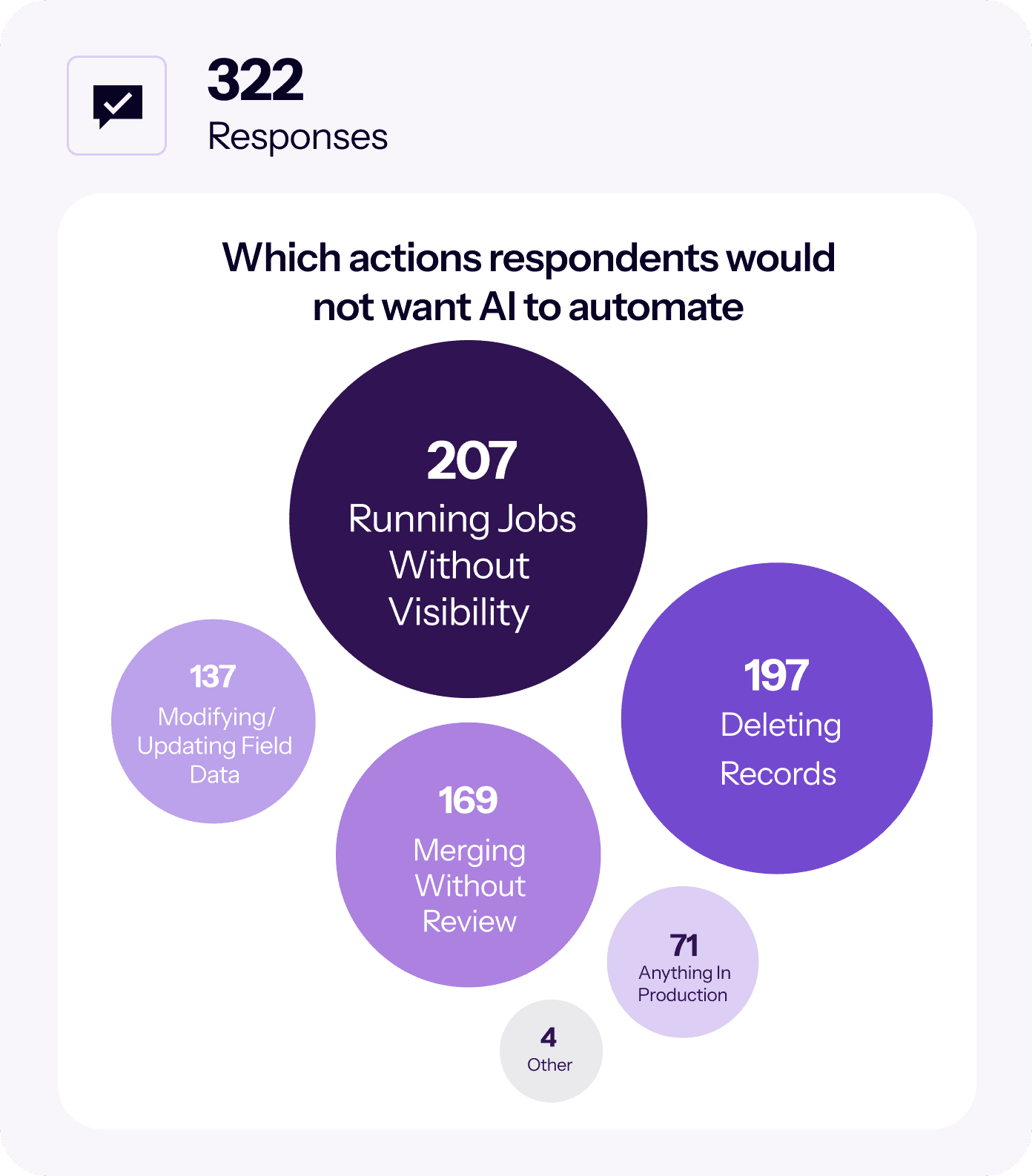
The previous section shows that Salesforce teams see real value in AI when it helps identify, explain, and suggest. But the next survey result shows where the line becomes much clearer: actions that directly change data. When Cloudingo asked which actions respondents would not want AI to automate:
- The strongest response was running jobs without visibility. This option received 207 selections, representing 64.3% of the 322 respondents who answered this question.
- Deleting records was close behind, with 197 selections, or 61.2% of respondents.
- Merging without review received 169 selections, or 52.5% of respondents.
This line of thinking is understandable. A deletion can remove needed information. A merge can change account history, relationships, activities, attribution, and reporting.
- The survey also shows concern about modifying or updating field data, which received 137 selections, or 42.5% of respondents.
- Another 71 selections, or 22% of respondents, went to “anything in production.”
That caution has a broader context: Salesforce research reports that 89% of IT leaders have experienced inaccurate or misleading AI outputs caused by poor data foundations. When AI acts on Salesforce data, weak inputs can quickly become visible outcomes.
Among open-text answers, one respondent mentioned that AI-assisted merging and deletion could be acceptable if review and restore options were available after the action was completed. This point is important. The concern is not only that AI might make a mistake. The broader concern is losing control over what changed, why it changed, and whether the change can be reversed.
Transparency and Control Are the Deciding Factors
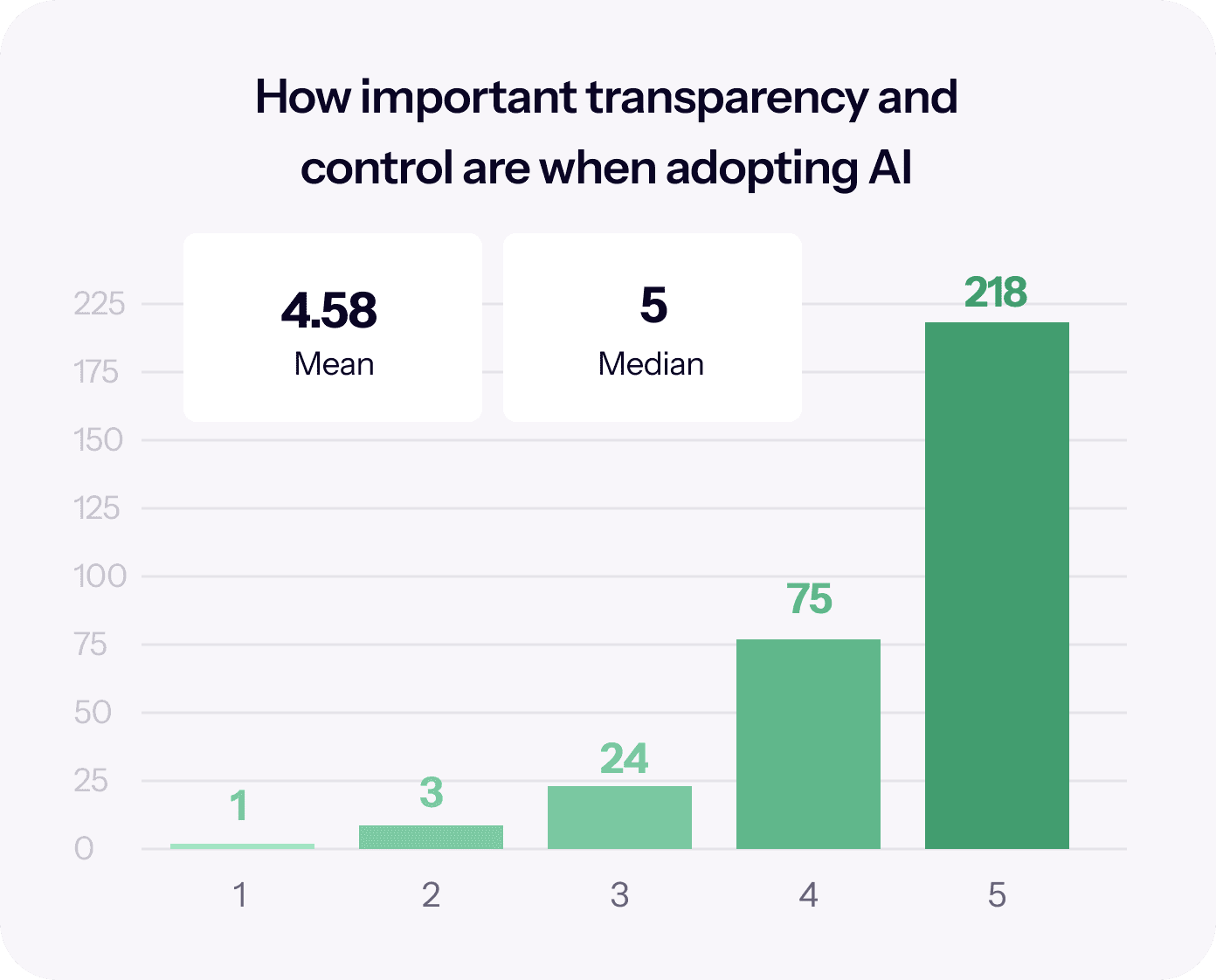
After seeing where respondents hesitate, the next survey result feels almost expected. Cloudingo asked how important transparency and control are when adopting AI. The average rating was 4.58 out of 5, with a median of 5.
That is one of the clearest signals in the survey. Salesforce teams are not saying that AI has no place in data quality work. They are saying that AI needs to work in a way that admins can review, understand, and manage.
Admins need to understand why two records were matched, which fields were used in the comparison, which record values would be kept, and what would happen to related data. This is what transparency looks like.
Control is the next part of the same requirement. It means deciding when a recommendation becomes an action. It also means knowing whether a change can be paused, adjusted, or reversed if needed.
A suggested match can be helpful. A hidden merge job running without review is a very different situation.
This concern also appears in Salesforce research, where 70% of security leaders say they are concerned about the accuracy and explainability of AI outputs.
What Level of AI Control Do Teams Prefer?
The next survey result shows the same point from another angle.
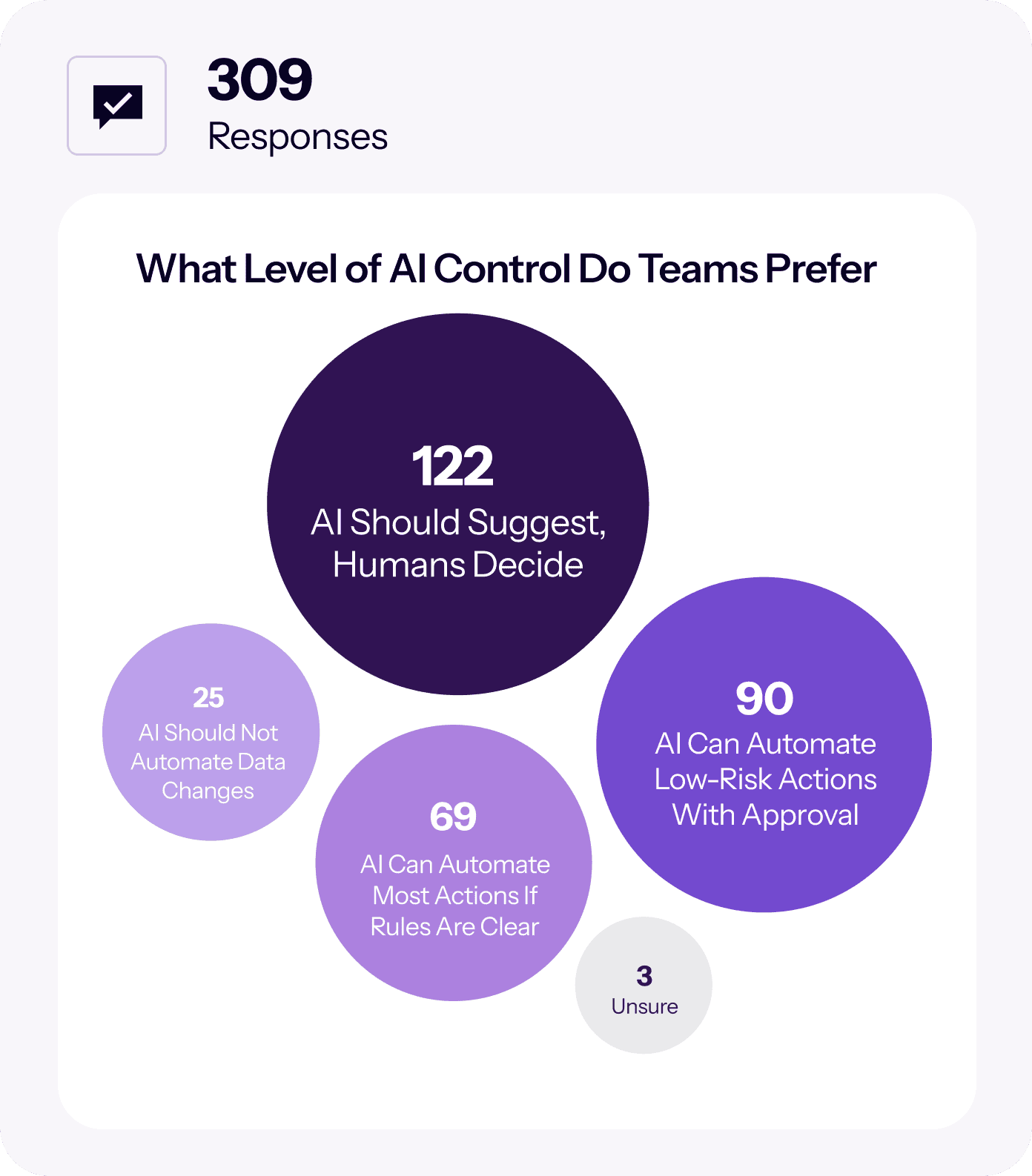
Cloudingo asked which preference best matched respondents’ views:
- The largest group selected “AI should suggest, humans decide.” This answer received 122 responses, or 39.5% of the 309 people who answered the question.
- Another 90 respondents, or 29.1%, preferred allowing AI to automate low-risk actions with approval.
- A smaller group, 69 respondents, or 22.3%, said AI can automate most actions if rules are clear.
- And 25 respondents, or 8.1%, said AI should not automate data changes at all.
The survey does not show a broad rejection of AI in data management. It shows a preference for boundaries.
Salesforce teams want AI to assist, but they also want clear rules, review steps, and admin ownership over what happens to their data.
What This Means for Salesforce Teams in Practice
Taken together, the survey results show a clear direction. Salesforce teams are interested in AI for data management, but they are not ready to hand over sensitive data decisions without review.
That is a reasonable position. In most Salesforce orgs, data quality is connected to many other processes.
- A duplicate Account can affect ownership, activity history, reporting, segmentation, and customer communication.
- A field update can affect automation.
- A merge can change how teams understand the full customer record.
This is why the most practical path is not full AI automation from the start, but controlled AI support.
In practice, that could mean using AI to identify duplicates, explain matches, suggest rules, flag risky records, or monitor data quality over time. These are areas where AI can reduce manual review and help admins focus on the records that need attention.
But when the action changes Salesforce data, the process needs stronger controls. Merges, deletions, field updates, and production jobs should not happen without visibility. The Cloudingo survey responses point to this clearly.
Teams want AI to help them move faster, but not at the cost of trust. This balance is important.
Broader CRM and AI research supports this view: 92% of CRM and AI decision-makers say a strong data strategy is critical to AI success.
This also means data quality improvement becomes a prerequisite for broader AI adoption. If Salesforce data is duplicated, incomplete, or inconsistent, AI may still produce recommendations, but those recommendations will be based on weak inputs. Before teams expand AI into more sensitive processes, they need a cleaner data foundation.
So the real takeaway is simple: AI can make Salesforce data quality work smarter, but it still needs a controlled process around it. Admins remain responsible for the data, even when AI helps surface the next best action.